Fast garage door repair in MaryvilleCall (865) 217-1964
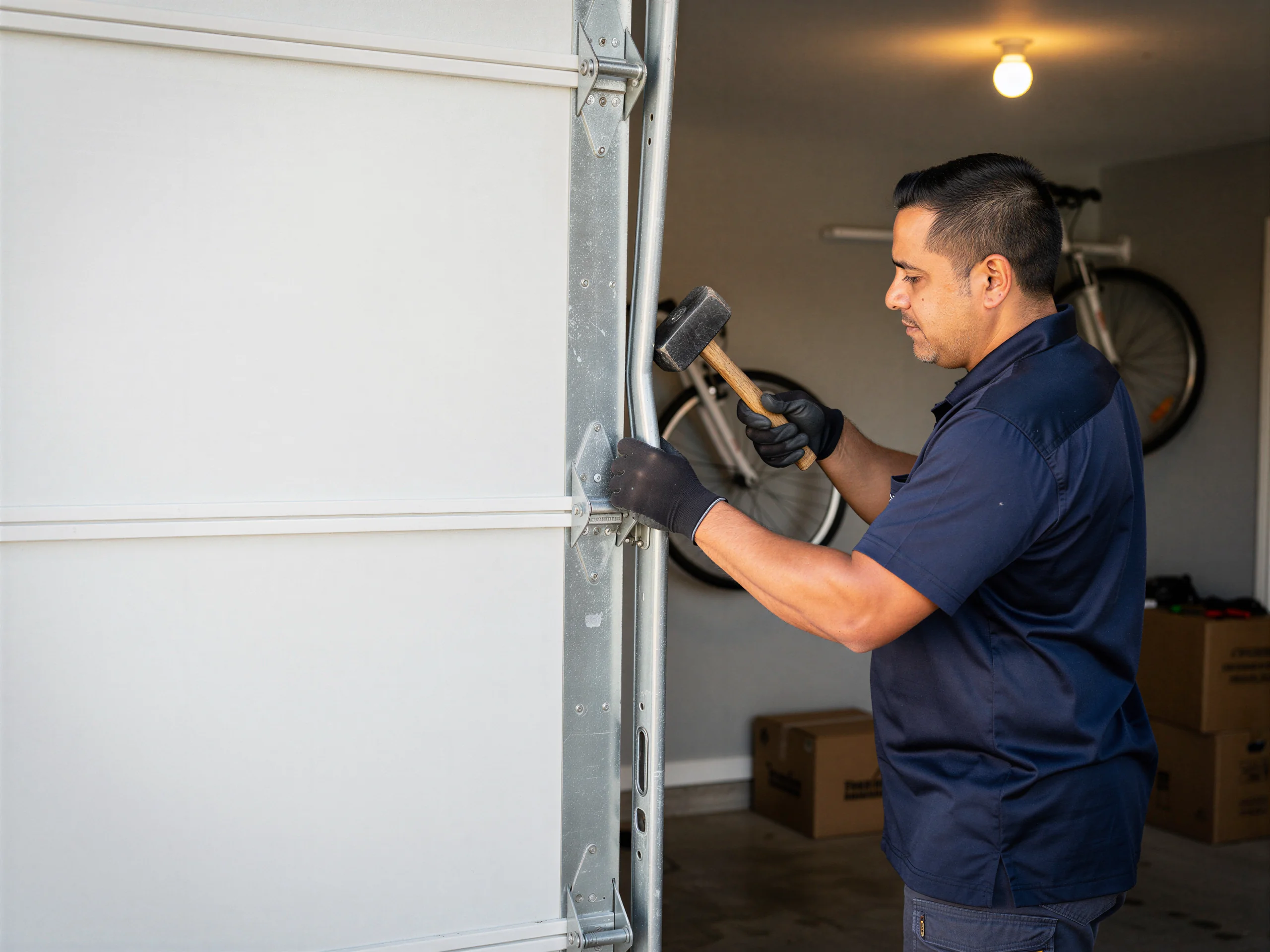
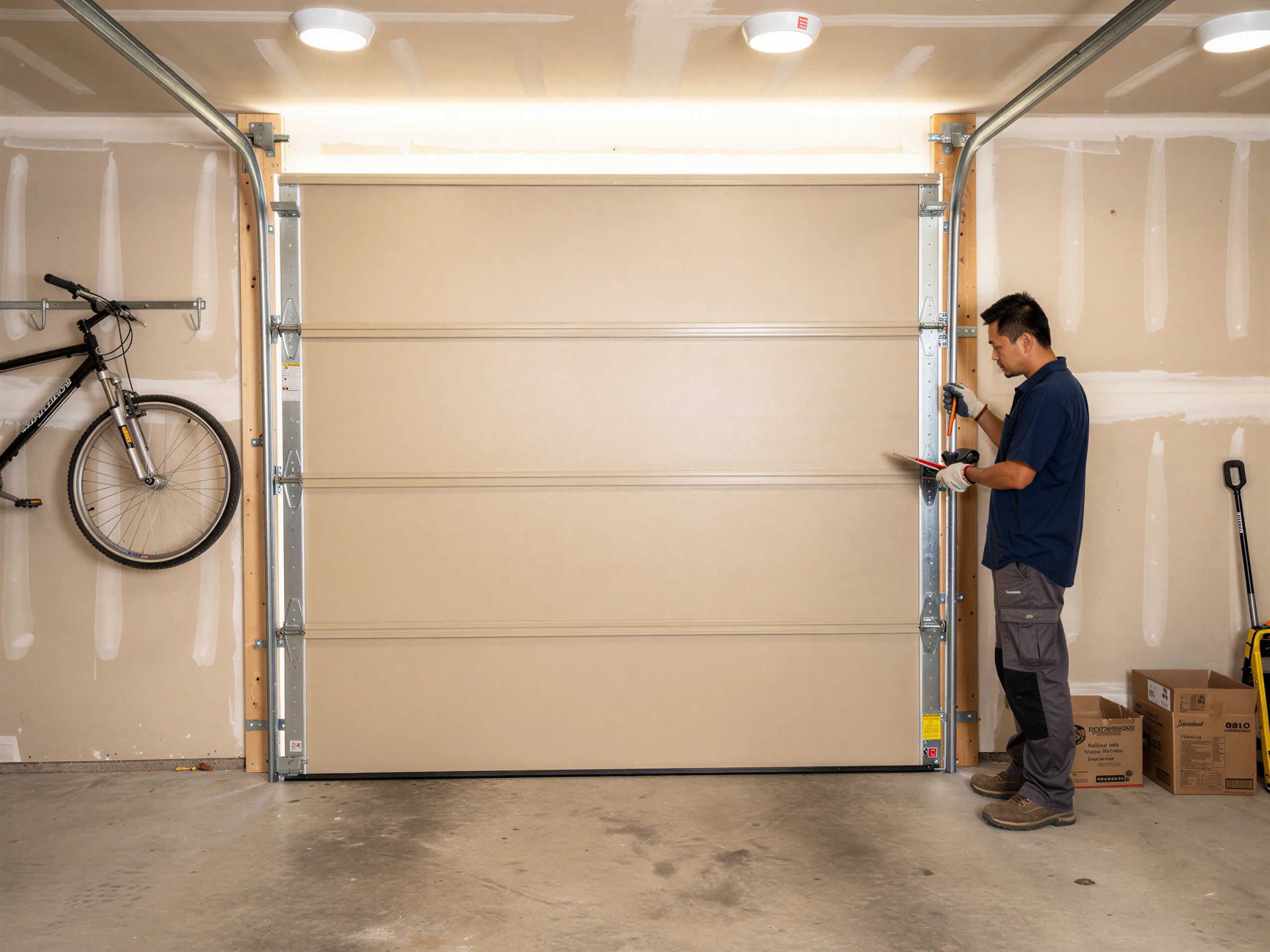
A technician inspects a closed tan garage door with a bicycle hanging on the left wall.

Maryville, TN

Garage Door Installation in Maryville, TN

Maryville homes built 1958-2003 are hitting original-door end of life. See why replacement beats repair here and how we handle the install.

Serving Maryville, TNBackground-checked techsHonest, upfront pricingFast local response
Local
Crews that work this area daily
Same-day
Response for most repair calls
Upfront
Pricing agreed before we start
Insured
Background-checked technicians

Local causes

What Causes It Around Here

Most houses across the Maryville service area went up between 1958 and 2003, with the median build year landing around 1989. That's a long run of homes, but it means a lot of garage doors out there are the same age as the house - thirty, forty years old, sometimes more. Across the thirteen named areas we work in, from Eagleton Village out to Vonore, that 1980s-to-90s building wave shows up block after block, which means the same door problem shows up block after block too.

A door built in that era was typically a single layer of steel or a wood panel door, with no insulation core and hardware sized for a lighter door. Thirty-plus years of opening and closing wears out that hardware long before the panel looks bad from the curb. Springs lose tension, tracks pit, rollers wear oval instead of round. None of that is a defect - it's just what happens to a door that's done its job for three decades in this climate.

The cold-moderate band we sit in adds a second layer. Temperature swings through the year expand and contract steel panels and wood door stock differently than a warmer region would, which speeds up seam separation and hardware fatigue on an older, uninsulated door.
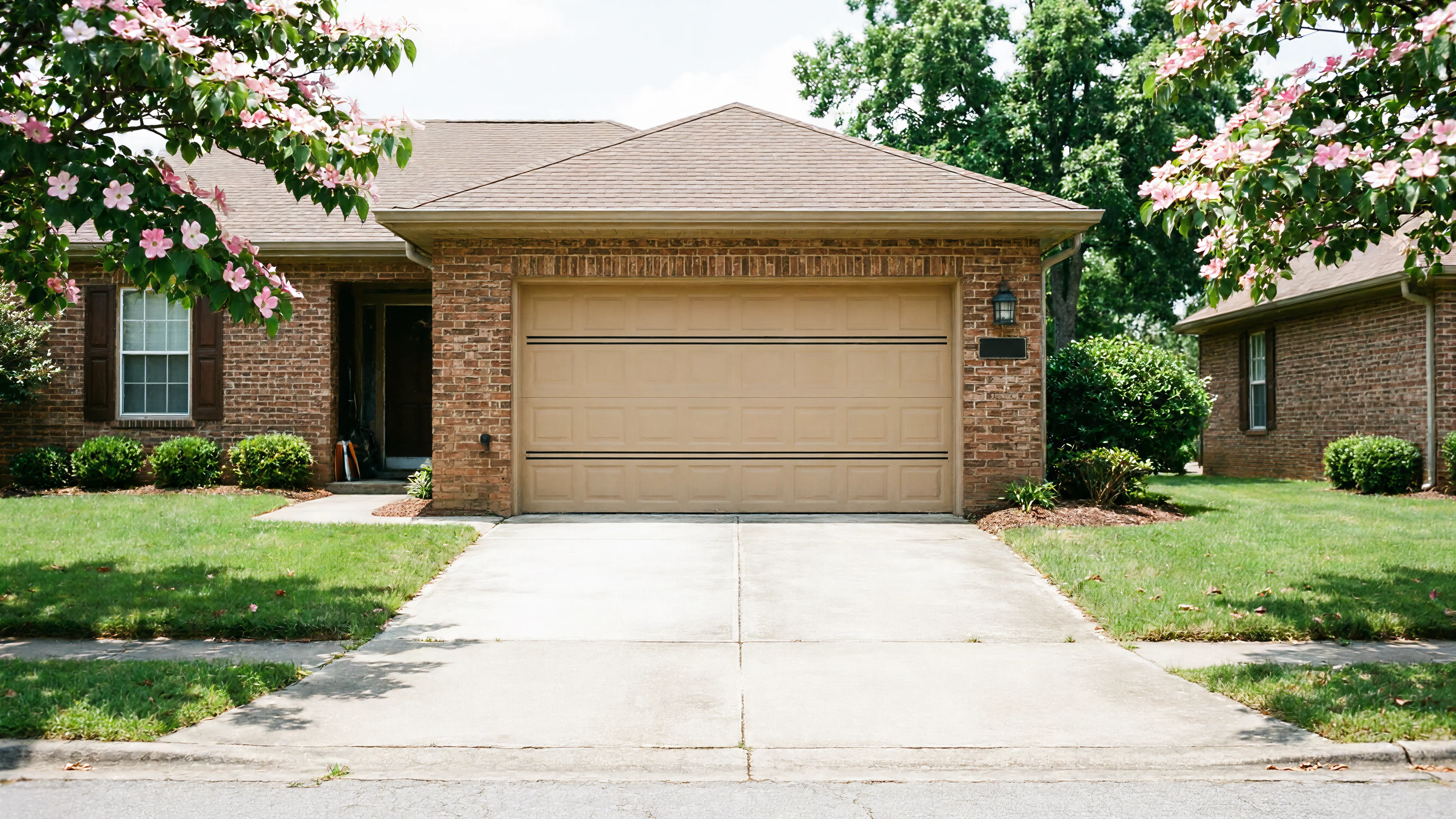
A tan garage door is centered on a brick house with a green lawn.

Symptoms

The Symptom

The door still runs, which is why owners wait. It opens, it closes, the opener motor doesn't complain. But it's noticeably heavier to lift by hand than it used to be, and the opener strains more on the up-cycle than it did a few years back.

Condensation and drafty seal

On cold mornings the panel is cold to the touch on the inside, and you can feel a draft along the bottom seal even with the door shut. Some owners notice condensation beading on the inside skin of the door in winter - a sign the panel has no insulation core doing anything to hold indoor air temperature away from the cold outer face.

Cosmetic door wear

Others just notice the door looks tired next to a newer build nearby, or that a neighbor on the same street, built the same year, already swapped theirs. None of these are emergencies.

Deferred door maintenance

That's the trap. A door that still opens doesn't feel urgent, so it gets pushed down the list until a spring finally lets go or a panel cracks in a cold snap.

Watch-outs

Where This Job Goes Sideways

The mistake we see most is treating an installation like a repair - patching a worn torsion spring or swapping one bent panel on a door that's already at the end of its service life.

Parts that miss root cause

You spend money on parts that don't change the fact the rest of the door, and the hardware under it, is from the same era and failing on the same timeline. Six months later you're back in the same spot with a different component. The other place this goes wrong is sizing.

Headroom and track position

A door from the 1958-2003 building wave was often installed to fit the opening, not to a modern spec. Swap in a stock replacement door without checking headroom, track position, and spring weight against the actual opener and framing, and you get a door that binds, an opener that strains, or a seal that never quite closes flush.

Rough opening measurement

We won't quote a full install over the phone without seeing the opening. Rough openings in homes from this era vary enough - even within the same subdivision - that a measurement mismatch is the single most common reason a new door doesn't perform the way it should.

Our process

How We Fix It

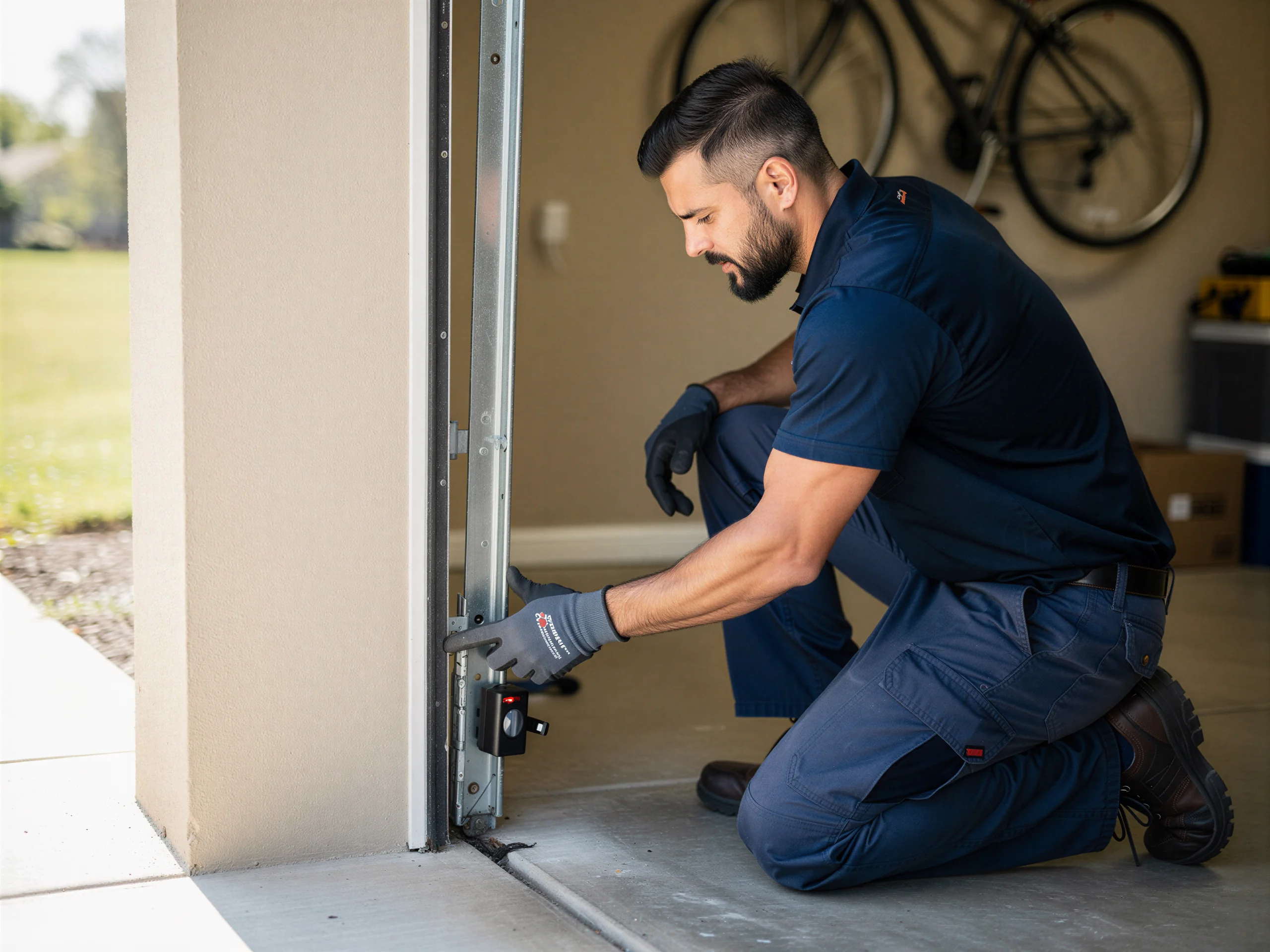
We start by measuring the actual opening, not the door you're replacing - headroom, backroom, and the framing around it, since homes built across this 1958-2003 stretch weren't built to one standard.

  1. Spring weight for new door

    From there we size spring weight and track hardware to the new door's actual weight, not the old door's, because an insulated replacement panel is almost always heavier than the single-layer door it's coming out.

  2. Insulated panel options

    For the cold-moderate climate here, we talk through insulated panel options versus the original uninsulated style, since that's the difference between a door that sweats on the inside in winter and one that doesn't. We set and balance new torsion springs to match, align the track, and test the opener's force settings against the new door weight before we call the job done.

  3. New door on old hardware

    What we don't do is sell a new door onto old, worn hardware to save a step. If the drums, cables, or opener motor are undersized for the new door, that gets replaced too - otherwise you've got a new panel riding on parts that were already failing.

Questions

Common questions

How do I know if I need a new door or just a repair in Maryville?

If the door and hardware are both original to a house built in the 1958-2003 range, a repair usually just buys a few more months before the next part fails. We'll tell you straight if a spring or roller swap will hold, or if the hardware's too worn to be worth patching.

Will a new insulated door fit my original opening?

Usually, but not always without adjustment. Homes from this era weren't built to one standard opening size, so we measure headroom and backroom before quoting, rather than assuming a stock size will drop in.

Does a new door need a new opener too?

Not always, but an insulated replacement panel is heavier than most original 1980s-90s doors. If your opener and spring setup were sized for the old door's weight, they may need resetting or replacing to handle the new one safely.

Why does my door sweat on the inside in winter?

That's condensation forming on an uninsulated panel in our cold-moderate climate - common on original doors from this area's building era that never had an insulation core. An insulated replacement door addresses it directly.

Ready when you are

Need a garage door sorted in Maryville?

Maryville Garage Door Pros repairs and installs garage doors, springs and openers in Maryville, TN and the surrounding area.

Call Now(865) 217-1964