Uneven drop and clicking
Some owners notice it slower: the door starts closing unevenly, one side dropping faster than the other, or the opener starts straining and clicking before it gives up partway through the cycle.
Maryville, TN
Torsion springs on Maryville homes built 1958-2003 wear out fast in cold winters. We diagnose, repair, and replace broken springs and cables right on site.
Local causes
Most of the houses we work on in this area went up somewhere between 1958 and 2003, with the bulk of the stock dating to the 1980s and 90s across the thirteen communities we cover. That matters for one reason: builder-grade torsion springs from that era were sized to last a set number of cycles, not forever, and nobody swaps them out until they fail. Add a cold-moderate climate where temperatures swing hard enough to stiffen steel and dry out factory lubricant, and you get metal fatigue showing up right on schedule. A spring rated for ten thousand cycles doesn't care how well you maintained the rest of the door - it counts winters as much as it counts openings. Houses built in the late 80s and early 90s are hitting the back half of that lifespan right now, which is why we see a steady run of snapped torsion springs on doors that otherwise look fine. The opener, the track, the panels can all be in decent shape while the spring underneath them is one cold morning away from letting go. This isn't a defect specific to any one builder - it's just what happens when original hardware from that build window meets another Tennessee winter.
Symptoms
The classic sign is a loud bang from the garage, usually first thing in the morning when the metal is coldest and tightest. After that, the door either won't budge or it moves a few inches and stops, because the opener isn't built to lift a door with no spring tension helping it.
Some owners notice it slower: the door starts closing unevenly, one side dropping faster than the other, or the opener starts straining and clicking before it gives up partway through the cycle.
If you look up at the spring bar above the door and see a visible gap in the coil, that's your answer right there. A few owners try to force the door open by hand once the opener stalls - don't.
A torsion spring under broken tension can still have stored energy in the cable and drum, and that's not a safe DIY moment. If the door is stuck halfway and the opener is making noise but not moving it, leave it alone and call.
Watch-outs
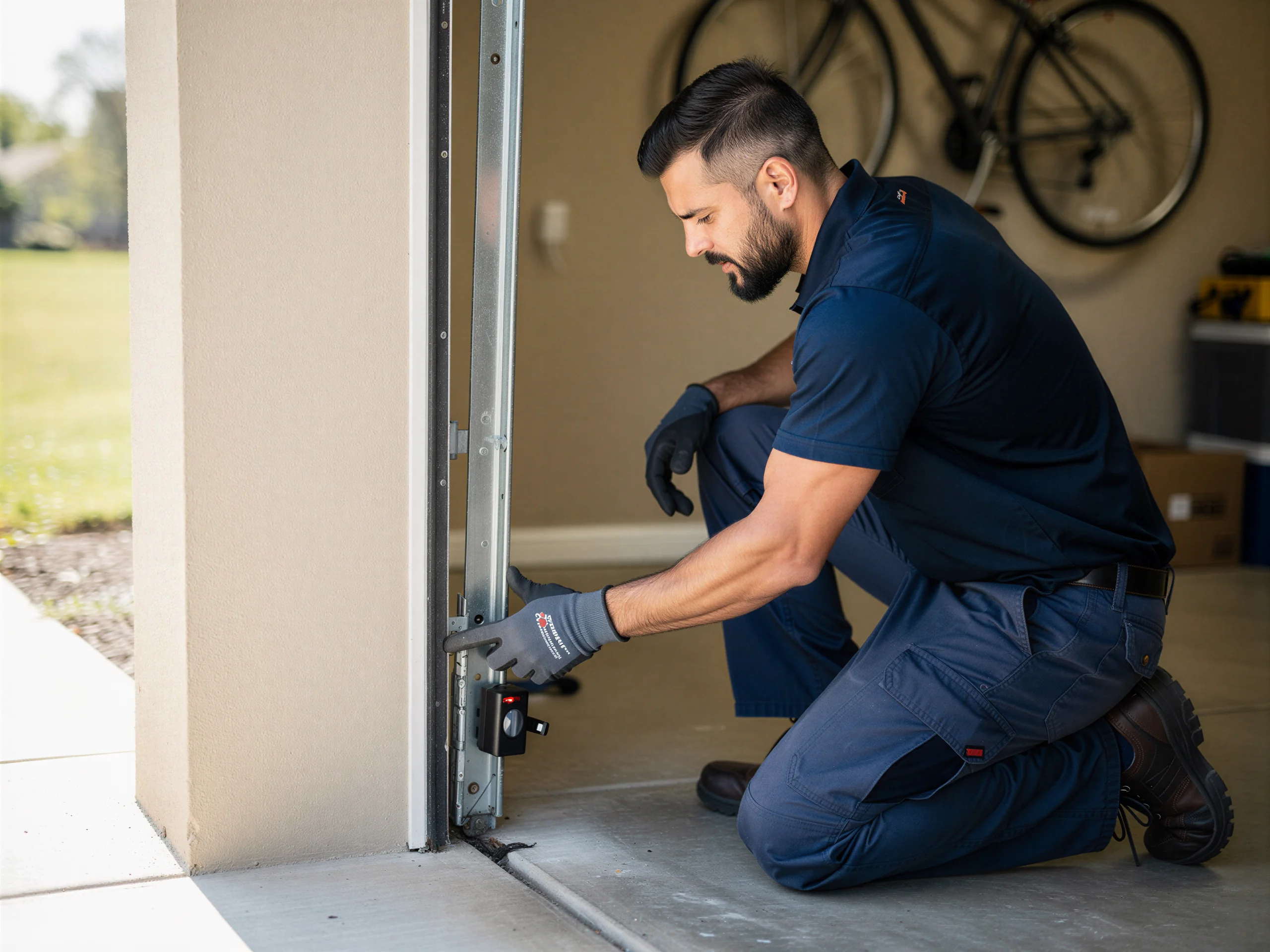
The complication isn't usually the spring itself - it's what's attached to it. On a lot of these builder-grade doors the torsion bar, drums, and cables were never upgraded, so when a spring finally snaps, the cable on that side has often been fraying for months without anyone noticing.
Swap the spring and leave a worn cable in place and you're back out here in a few weeks for a second call. We also run into mismatched springs from a previous repair - someone put in a replacement rated for a lighter door, and now the opener's been fighting an under-tensioned spring ever since, which shortens the life of the gears up top.
Across the owner-occupied houses we serve in this area, we see enough of these stacked problems that we don't quote a spring job without checking the drums, bearing plates, and cable condition first.
One honest limitation: if the torsion bar itself is bent or the bearing plate is rusted through, that's not a same-visit spring swap anymore - it turns into a bigger hardware job, and we'll tell you that before we start, not after.
Our process
We match the spring to the door's actual weight and cycle rating, not just whatever was on the bar before, since a mismatch is half the reason these fail early.
That means checking door weight, track type, and whether the original hardware is torsion or an older extension-spring setup - both still show up on houses from this build era. We replace both springs on a double-spring setup even when only one has broken, because the other one is on the same clock and failing it separately a month later costs you a second trip.
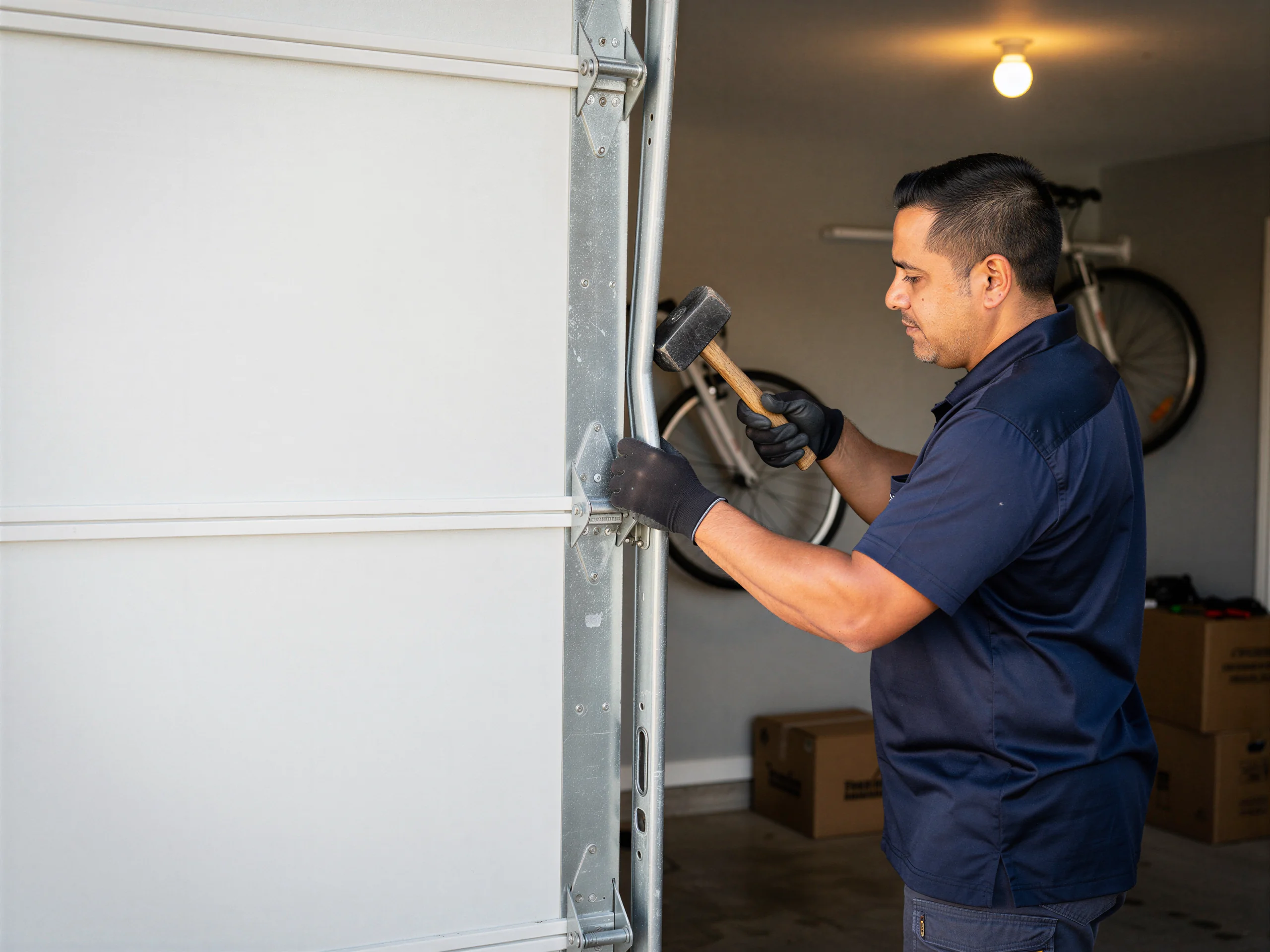
Cables, drums, and bearing plates get inspected at the same time, since that's where the hidden wear usually is. Once the new spring is set and balanced, we run the door through full cycles to check that it holds position at any point of travel - a door that drifts open or slams shut on its own means the tension still isn't right, and we don't leave until it is.
If the bar or plate is damaged beyond a spring swap, we'll walk you through what that repair actually involves before any work starts, rather than surprise you with it on the invoice.
Questions
Steel contracts and stiffens in cold, and factory lubricant thickens, so the spring is under more resistance right when it's also at the weakest point of its fatigue cycle. Most of the snaps we get called out for happen in the first hour or two after a cold night, which lines up with the cold-moderate swings this area gets.
If your house was built in the main 1958-2003 window common in this area, standard torsion hardware is usually available. Older extension-spring setups on some of the earliest houses can take longer to source parts for - we'll tell you upfront if that's the case rather than guess.
You can, but we don't recommend it on a double-spring door. The other spring is the same age and has taken the same number of cycles, so it's close behind on the same fatigue curve. Replacing both at once costs less than two separate service calls a few weeks apart.
Yes - we cover the surrounding communities including Eagleton Village, Alcoa, Louisville, Rockford, Friendsville, Greenback, Townsend, Farragut, Seymour, Tellico Village, Karns, Lenoir City, and Vonore.
Explore more
Ready when you are
Maryville Garage Door Pros repairs and installs garage doors, springs and openers in Maryville, TN and the surrounding area.