
Blog
What Actually Happens During a Garage Door Call in Maryville
In Maryville, a garage door service call checks hardware sized to houses built 1958-2003, torsion springs worn by cold winters, and tracks out of square.
How Local Conditions Play In
Most of the houses we work on in this part of Tennessee went up between 1958 and 2003, with the heaviest concentration dated to the 1980s and 90s. That range matters because hardware changed a lot over those four decades - early torsion setups, mid-80s galvanized track, and the heavier steel doors that showed up closer to 2000 all behave differently under load. A tech walking into a 1962 build and a 1994 build on the same street is looking at two different jobs, even if the symptom sounds the same on the phone.
We run calls across a service area that stretches from Eagleton Village and Alcoa, both about four miles out, to Louisville and Rockford at seven, Friendsville at eight, and farther out to Lenoir City, Vonore, and Tellico Village. The housing pattern holds fairly consistent across most of that radius, so the diagnosis habits that work in Maryville proper carry over to the surrounding towns without much adjustment. What does change is drive time, and that's the one variable we can't fix with a truck full of parts.
Across the service area there are roughly 35,610 households, with about 24,582 of those owner-occupied houses - that's the installed base of garage doors we're actually dealing with, not apartment or rental units with a landlord making the call.
What Is Going On
Call it in and nine times out of ten the actual cause is one of three things: a torsion spring that's done flexing, an opener logic board or gear that's aged out, or a track that's walked out of square because the slab it's bolted to has settled. On a house from the 1958-1989 stretch of our local stock, we're often looking at original or second-generation hardware - parts that were never designed to be rebuilt forever. On a 1990s build, the more common failure is the opener itself, since a lot of those first-generation chain drives are well past the point where replacement parts make sense.
A service call starts with the door moving, not the door talking. We check spring balance by hand, run the opener through its force and limit settings, and look at the track alignment from the floor up - most misalignment on an older slab shows up as a gap at the bottom corner before it ever shows up as noise. We also check the cables and rollers, since a cable that's frayed on one side of a double door will throw the whole panel crooked long before it snaps.
Median household income in the service area runs $83,485, and what that tends to mean in practice is owners asking for a straight answer on replace-versus-repair rather than the cheapest patch - we give that answer based on what the door actually needs, not what's easiest to sell.
The Seasonal Bit
This area sits in a cold-moderate climate band - real winter, but not the kind that freezes a slab solid for months. That matters for two reasons. First, grease and lubricant on rollers and hinges thickens up in a cold snap, which is why a door that ran quiet in October starts groaning in January even though nothing actually broke. Second, the freeze-thaw cycle through a Tennessee winter - cold nights, warmer days, repeat - works on steel track brackets and lag bolts over years, loosening what was torqued tight when the house was built.
On the older end of our housing stock, the pre-1990 builds, that freeze-thaw wear shows up as brackets that have backed out a quarter-inch from the jamb, which throws the whole track out of plumb by the time winter's over. On newer builds the symptom is usually an opener that hesitates on cold mornings because the logic board is reading motor resistance wrong in low temperatures.
We don't get the kind of deep freeze that cracks foundations outright, so we're not chasing the extreme damage you'd see farther north. What we do see is steady, unglamorous wear that adds up over a decade or two - which is exactly why a door that was fine for twenty years can fail in the same month three neighbors' doors do, once that winter hits the stock hard enough.
When to Get Help
Call before the spring finishes going. A torsion spring that's visibly stretched or has a gap in its coils is a same-day problem, not a wait-and-see one - the cables on either side of a bowed door are carrying load they weren't built for, and that's how a cable snaps under tension. If the door drops fast on one side or won't stay up on its own, stop using the opener and call; don't try to force it level by hand.
We'll also say plainly where a repair isn't worth doing. If a door from the early end of our 1958-2003 stock has a bent track, a dead opener, and worn rollers all at once, patching each piece separately usually costs more over a year than one clean replacement - we'll tell you that instead of running three separate invoices.
One honest limit: parts for some of the oldest original hardware in this area aren't something we keep on the truck, since most manufacturers stopped making direct replacements for that generation of track and spring years ago. When that's the case, we'll say so on the first visit rather than stringing out a repair that was never going to hold.
Questions
Common questions
How old does a garage door have to be before repair stops making sense?
There's no single age cutoff, but once a door from the early end of our local stock - 1958 through the 1970s - needs a spring, an opener, and track work in the same visit, replacement usually costs less over time than three separate repairs. We'll tell you straight if that's where your door is.
Why does my opener act up more in winter?
This area sits in a cold-moderate band, so lubricant thickens on cold mornings and some older logic boards read motor resistance differently in low temperatures. It's not usually a failure - just the hardware reacting to the season - but it's worth a check if it happens every cold morning.
Do you cover towns outside Maryville?
We run calls out to Eagleton Village, Alcoa, Louisville, Rockford, Friendsville, and farther towns like Lenoir City, Vonore, and Tellico Village, all within about four to eighteen miles. The housing stock pattern is similar across most of that area, so the same diagnosis approach applies.
What's actually checked on a standard service call?
Spring balance by hand, opener force and limit settings, track alignment from the floor up, and the condition of cables and rollers. Most misalignment on an older slab shows up as a gap at the bottom corner before it shows up as noise, so we check that first.
Recommendation
You Might Also Like
More garage door guides for Maryville homeowners.
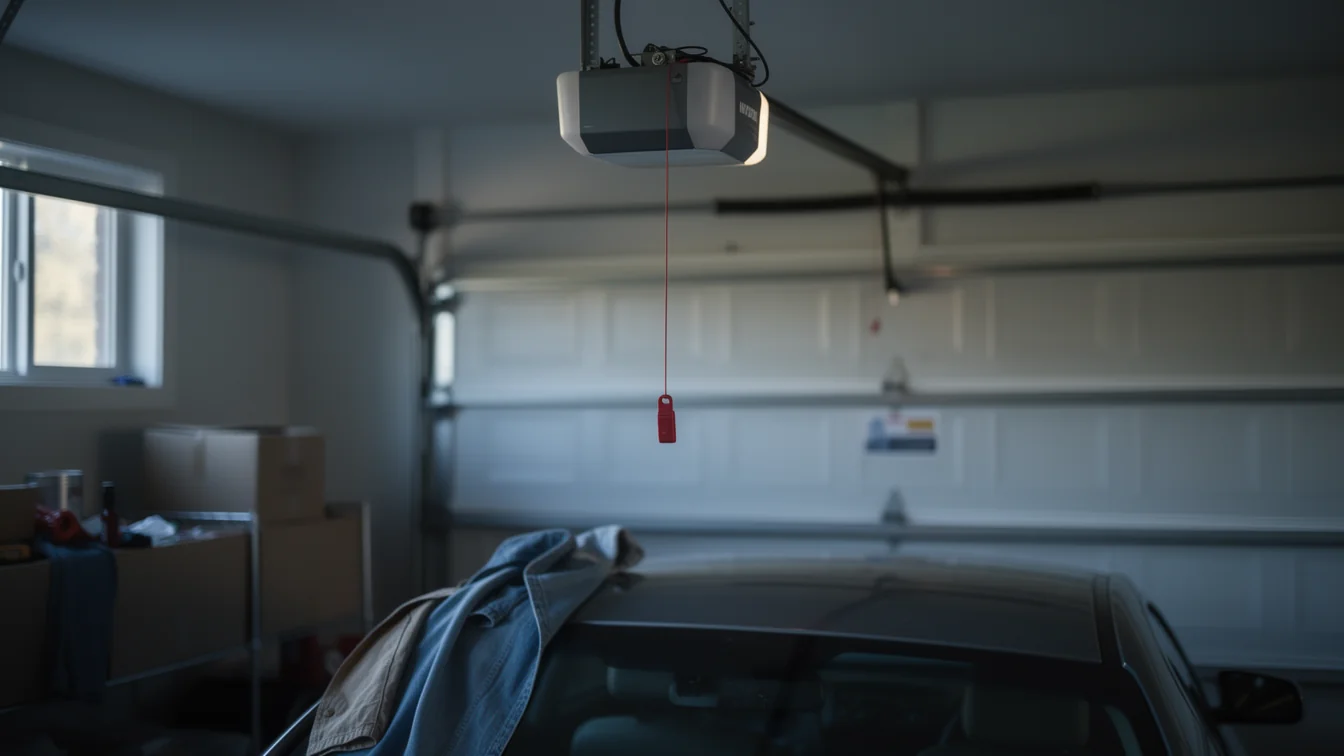 What Your Maryville Garage Door Is Actually Dealing With
Most Maryville homes went up between 1958 and 2003, mostly 1980s-90s builds, which means original openers and springs built for a different cold-weather code.
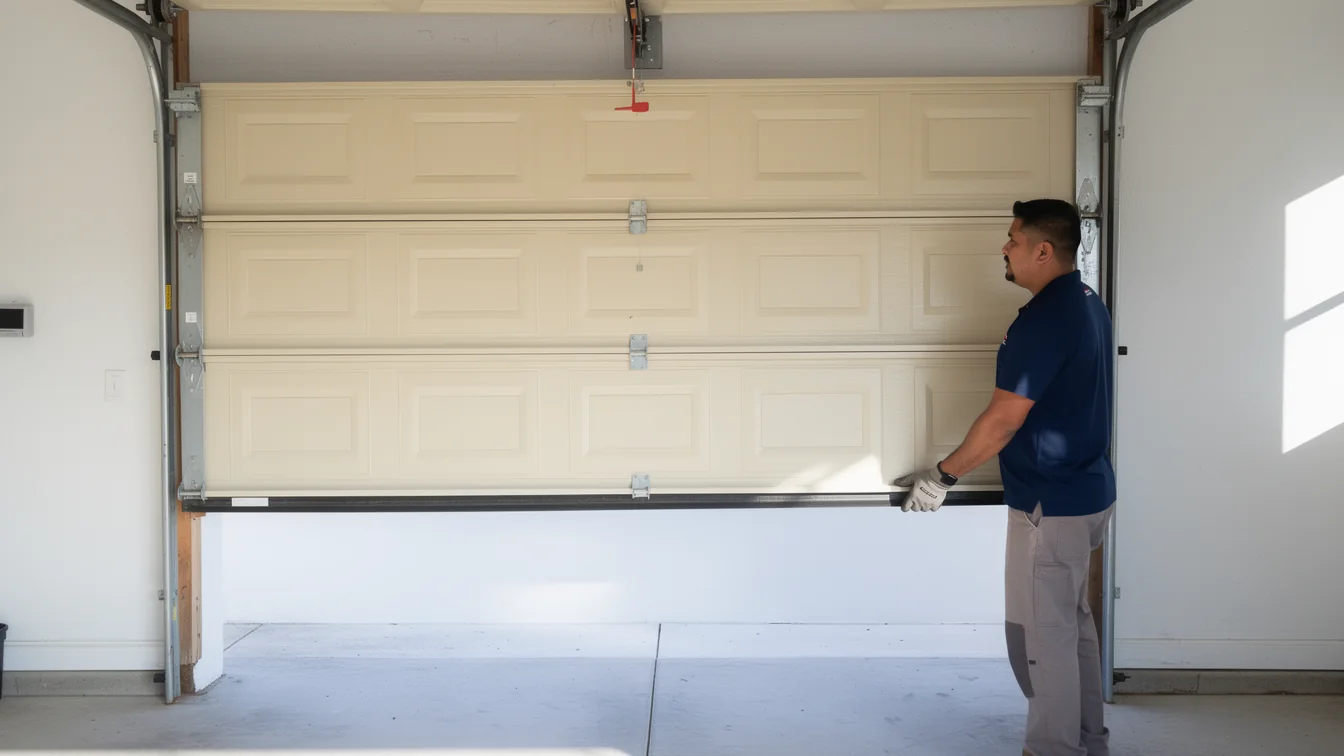 Openers, Power Cuts, and the Age of Your Door in Maryville
Maryville homes built mostly in the 1980s and 90s face cold-season opener failures and power-cut lockouts.
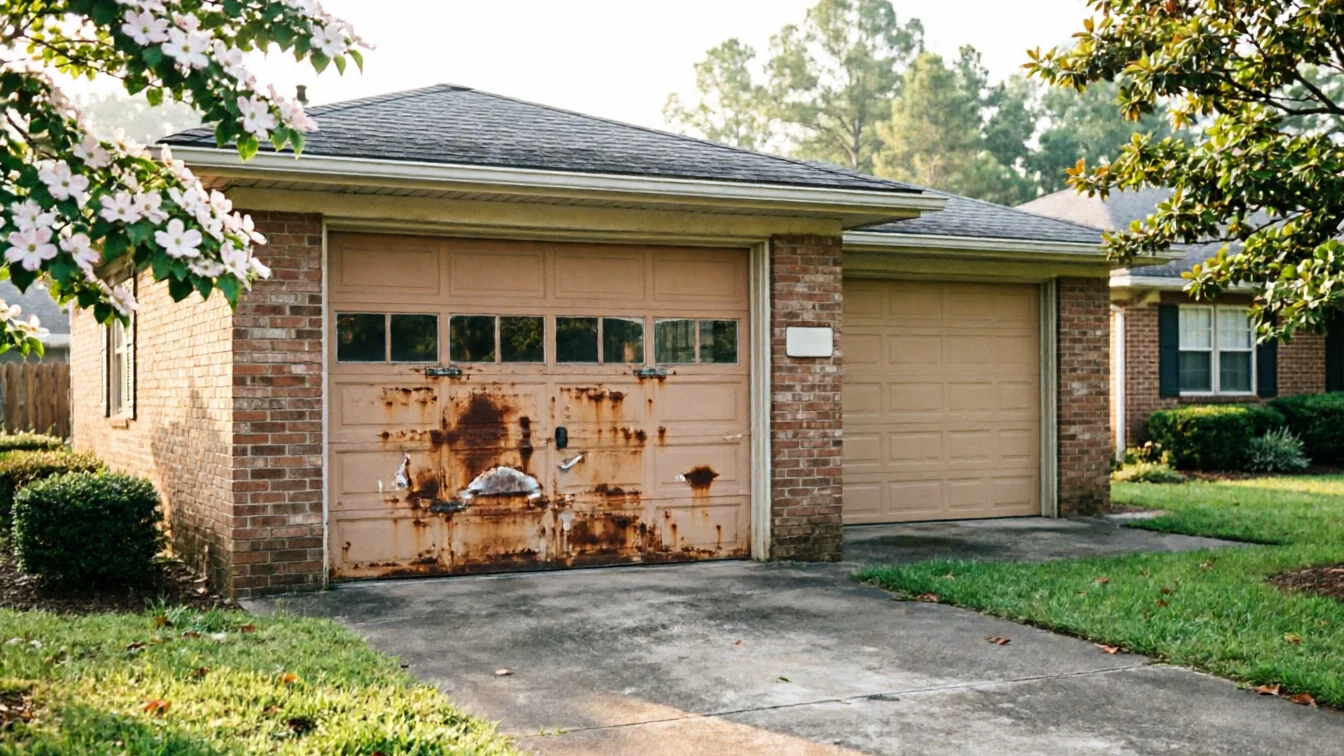 When an Older Door in Maryville Still Has Life Left
Maryville homes built mostly between 1958 and 2003 often have garage doors worth repairing, not replacing.
Ready when you are
Need a garage door sorted in Maryville?
Maryville Garage Door Pros repairs and installs garage doors, springs and openers in Maryville, TN and the surrounding area.