Blog
When a Spring Goes in Cold Weather Around Maryville
Most homes near Maryville went up between 1958 and 2003, with the bulk from the 1980s and 90s - that building era is exactly where cold-weather spring failures start to show up now.
How Local Conditions Play In
Most of the houses we work on here were built between 1958 and 2003, with the thickest band going up in the 1980s and 90s. That matters because the torsion spring on a door from that era is usually the original, or a direct swap from twenty-some years back, and steel doesn't get more forgiving with age. Maryville sits in a cold-moderate climate band, not the deep freeze you'd get further north, but cold enough that the metal in a spring tightens and loses a little give on mornings when the temperature drops fast overnight. A spring under that extra tension is more likely to let go on the cold pull than on a warm one. Across the service area - Eagleton Village, Alcoa, Louisville, Rockford, and the rest out toward Lenoir City and Vonore - the same housing wave means the same aging hardware, which is why we see a cluster of these calls once the weather turns rather than a random scatter through the year.
What Is Going On
A torsion spring is wound steel under constant load, and cold air makes steel a little more brittle at the microscopic level, especially after a couple decades of daily cycling. A door built in the 1980s or 90s has likely seen ten to fifteen thousand open-close cycles by now, and age plus cold is a worse combination than either one alone. What actually happens: the spring's winding cone has a hairline crack that's been growing for years, invisible from the garage floor, and a cold snap is the final push. The door doesn't ease down, it drops, usually with a bang loud enough to bring someone running. Cables can go the same way - a cold, stiff cable under load is more likely to fray at the drum than a cable that's been warm all day. None of this is Maryville-specific weather drama. It's ordinary cold acting on hardware that's already near the end of its working life because of when the house was built.
The Seasonal Bit
Across the 35,610 households in this service area, 24,582 are owner-occupied houses, and a lot of them share that same 1980s build date - which means a lot of original or first-replacement springs are reaching the same age at roughly the same time. The seasonal pattern we see isn't about ice or snow load on the door itself, it's about the first hard cold mornings of the year catching springs that were already close to done. If your door has felt heavier to lift by hand over the past few months, or the opener has started straining on the way up, that's usually the spring losing tension gradually before it finally snaps. Waiting until spring to deal with it is a bet against a winter morning with a cold engine in the car and a door that won't open.
When to Get Help
Call before the spring actually breaks if the door feels heavier than it used to, or if you hear a grinding or popping sound on cold mornings - that's often the warning before the failure, not a separate problem. If it's already broken, don't try to force the door open on the opener; that strains the motor and can bend the track. With median household income here at $83,485, most owners choose to replace a failed spring outright rather than patch it, since a spring repair on a door this age is straightforward and the door itself is usually still sound. One honest limit: if the door is original to a house built in the late 1950s or 60s, parts for that older hardware aren't something we keep on the truck, and sourcing them can add days to the job - worth knowing before you assume next-day service on anything that old.
Questions
Common questions
Why does my garage door spring break more in winter?
Cold steel loses a little flexibility, and a spring that's already near the end of its life is more likely to fail under that added stiffness than one that's still young. It's less about the cold itself and more about cold finding the weak point first.
How old is too old for a garage door spring in this area?
A lot of houses around Maryville were built in the 1980s and 90s, which puts their original springs at thirty-plus years old. Most springs don't last that long under daily use, so if yours is original to a house from that era, it's likely overdue.
Should I replace the whole door or just the spring?
If the spring breaks but the track, panels, and opener are in good shape, replacing just the spring is the right call. Whole-door replacement makes sense when the door itself is original to an older house and the hardware is already failing in more than one place.
Can I drive my car out if the spring just broke?
If the door is down and won't lift, don't force it on the opener. Depending on how the door is sitting, it may be possible to release it manually, but a broken torsion spring under load is dangerous to handle without the right bars and clamps.
Recommendation
You Might Also Like
More garage door guides for Maryville homeowners.
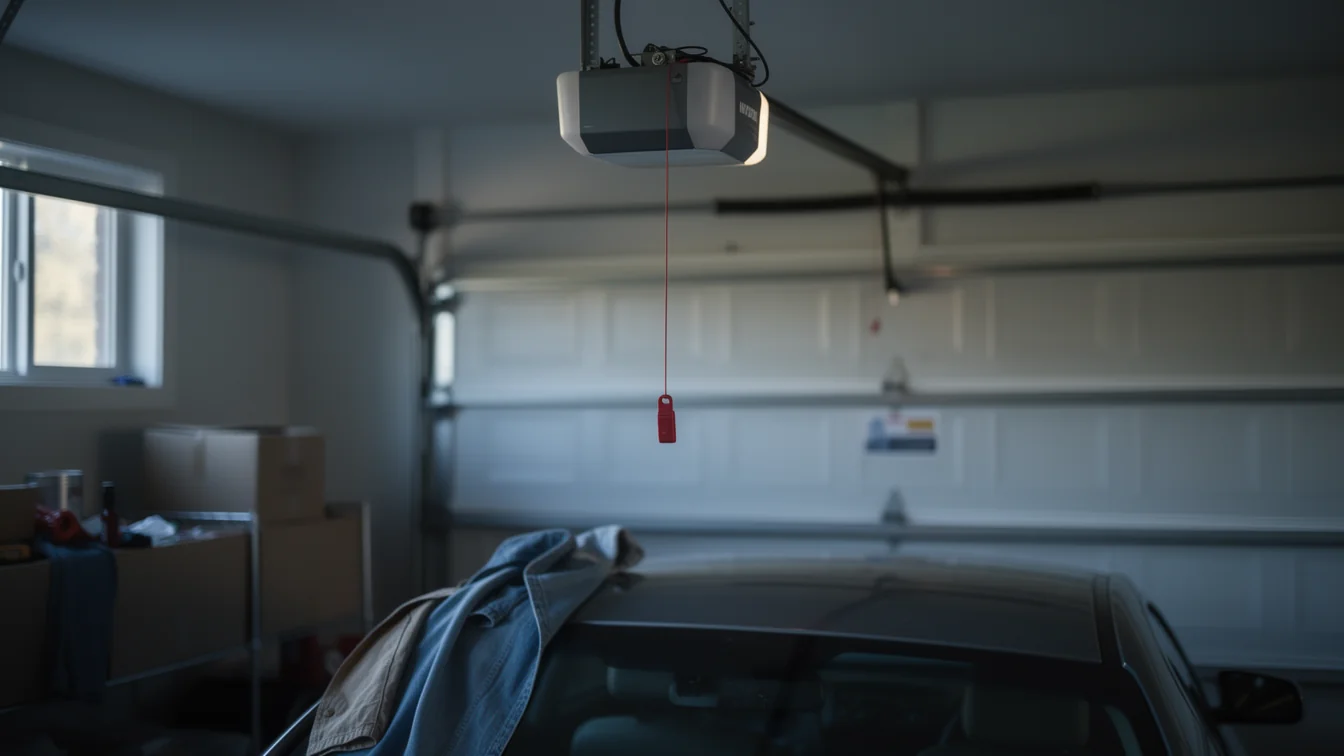 What Your Maryville Garage Door Is Actually Dealing With
Most Maryville homes went up between 1958 and 2003, mostly 1980s-90s builds, which means original openers and springs built for a different cold-weather code.
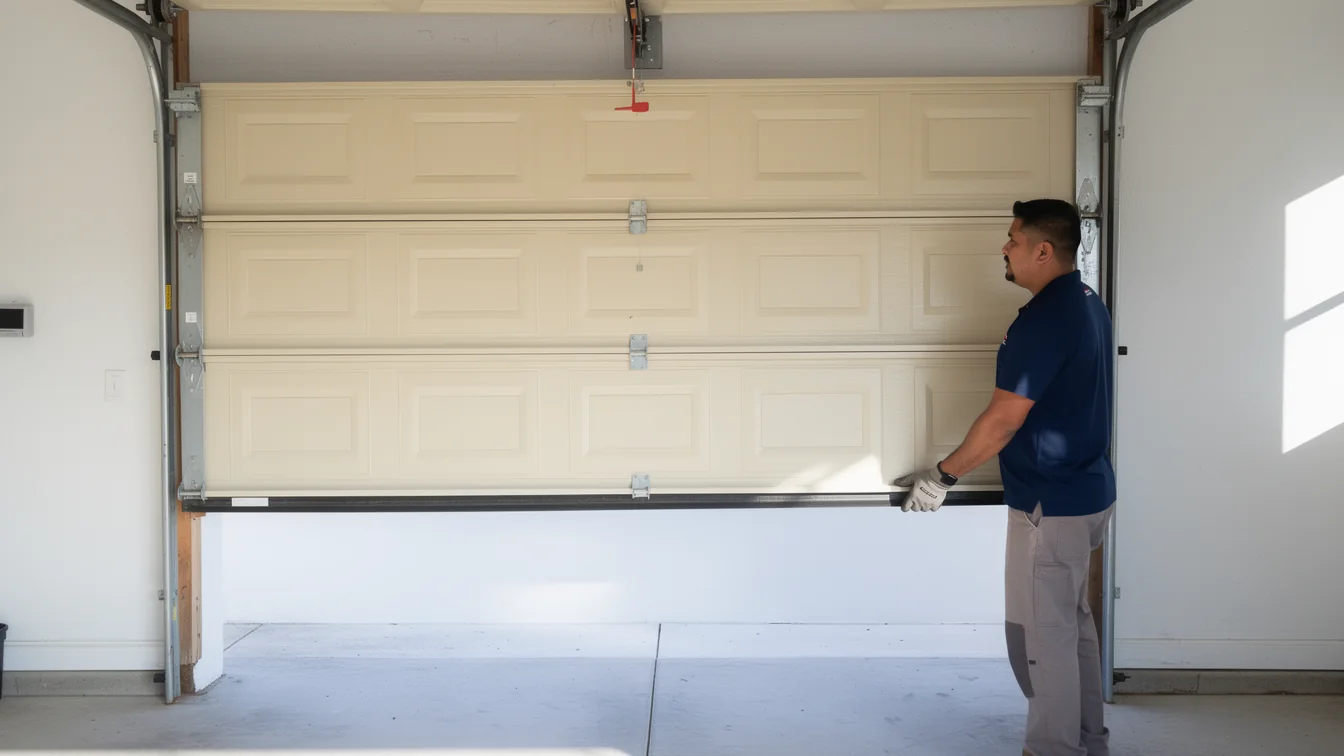 Openers, Power Cuts, and the Age of Your Door in Maryville
Maryville homes built mostly in the 1980s and 90s face cold-season opener failures and power-cut lockouts.
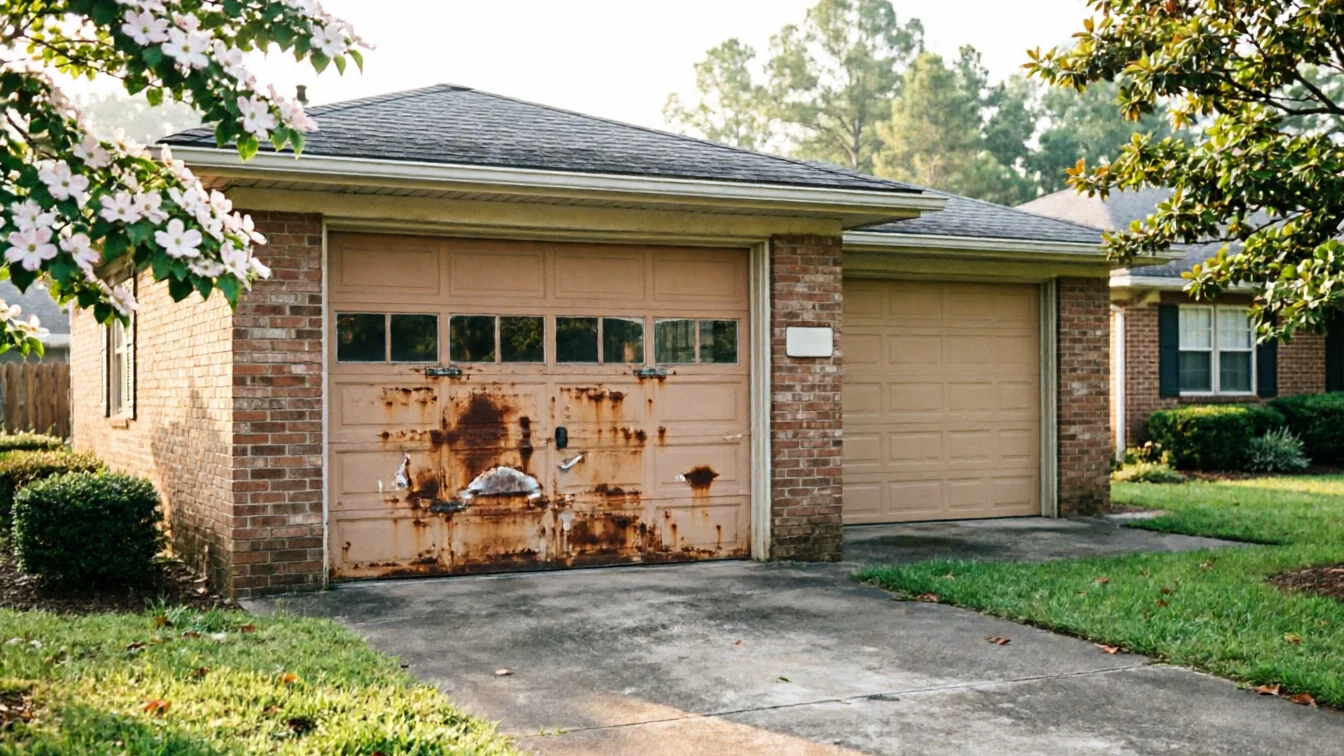 When an Older Door in Maryville Still Has Life Left
Maryville homes built mostly between 1958 and 2003 often have garage doors worth repairing, not replacing.
Ready when you are
Need a garage door sorted in Maryville?
Maryville Garage Door Pros repairs and installs garage doors, springs and openers in Maryville, TN and the surrounding area.