Photo eye sensor cleaning
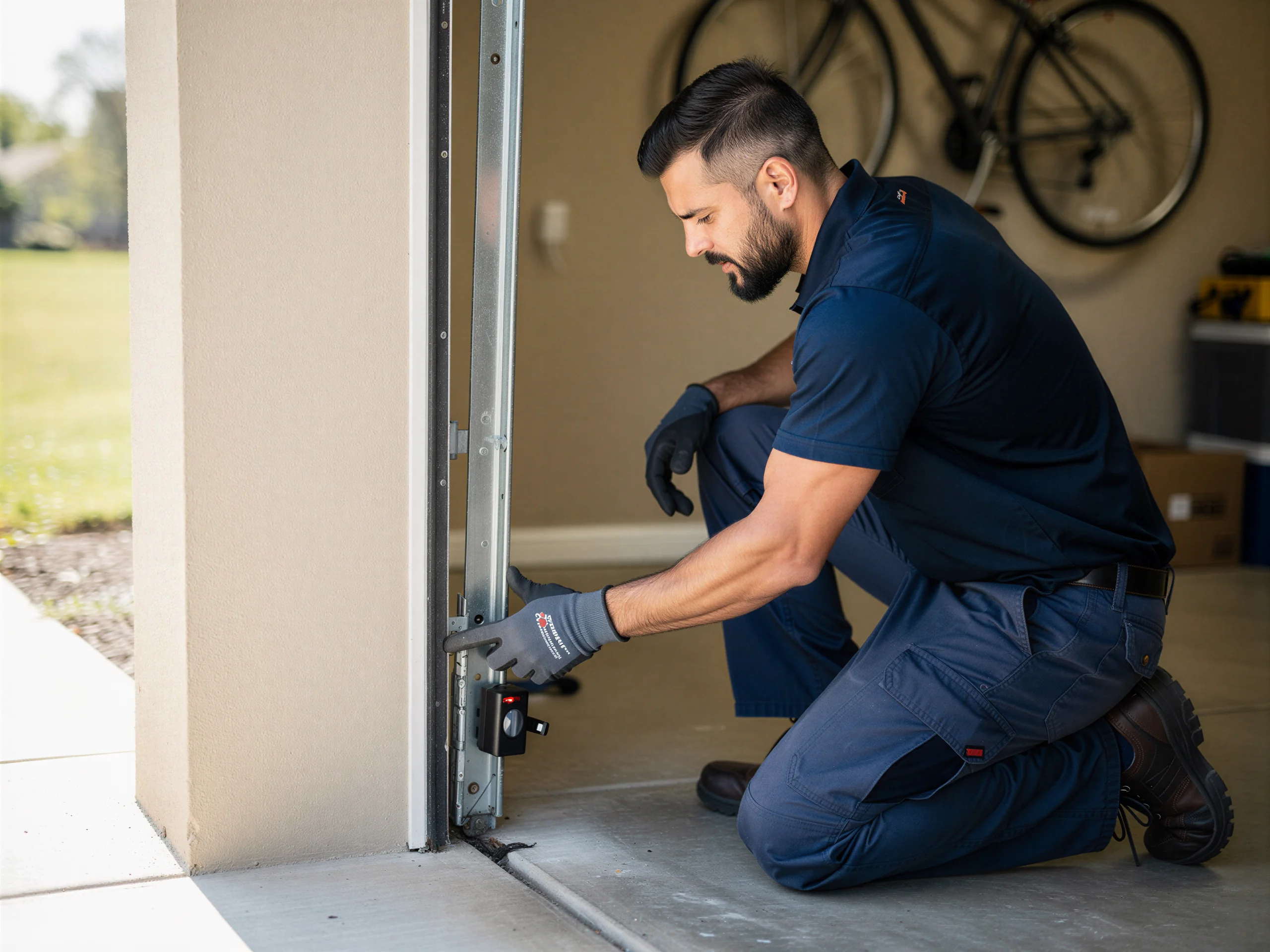
Check the two small photo-eye sensors near the floor on each side of the track; if one's knocked out of alignment or has a cobweb across the lens, the opener will refuse to close and just blink the light at you.
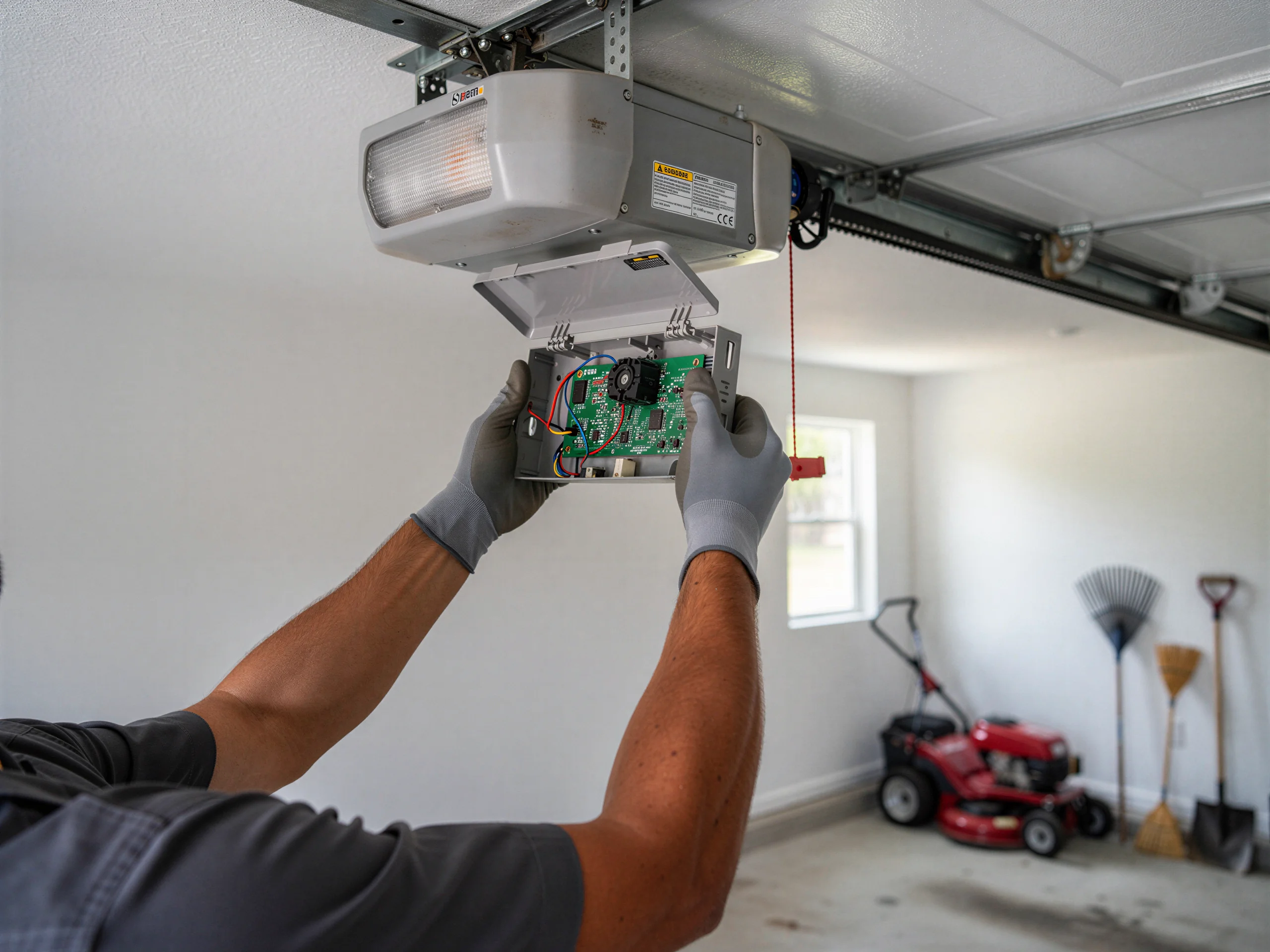
Farragut, Maryville
Opener repair for Farragut's newer housing stock, built mostly in the early 1990s. Maryville Garage Door Pros covers the 14-mile run from Maryville, no local branch.
DIY or pro
Before you call anyone, there's a short list worth checking yourself. Unplug the opener and plug it back in, or reset the breaker - a lot of "dead" openers are just tripped.
Check the two small photo-eye sensors near the floor on each side of the track; if one's knocked out of alignment or has a cobweb across the lens, the opener will refuse to close and just blink the light at you.
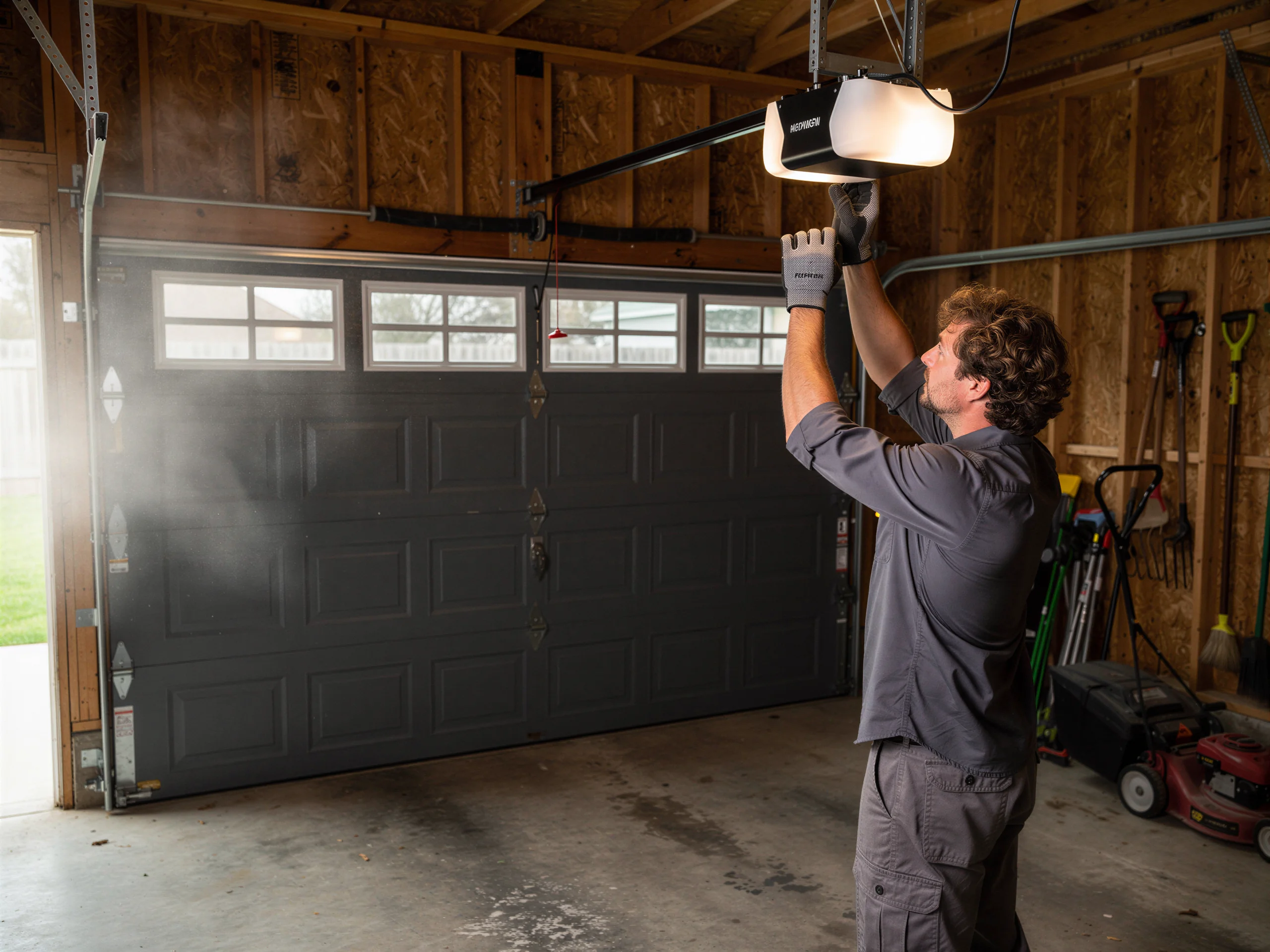
Swap the remote battery before you assume the logic board is bad. None of that costs you anything. What you shouldn't do is open the opener housing and start swapping the circuit board yourself, or try to adjust the force and limit settings by guesswork.
On a house with a median build year around 1992, a lot of these openers are original or close to it, and the internals - capacitors, gear sets, logic boards - are old enough that guessing wrong can finish off a motor that a proper diagnosis would have saved. If the door itself won't move by hand with the opener disconnected, that's not an opener problem at all - that's a spring, and a different job.
Local causes
Farragut's housing runs newer than a lot of the rest of the service area - the broader territory spans 1958 to 2003 with a median around 1989, but Farragut's own stock centers closer to 1992. That matters for openers specifically: a chain-drive or screw-drive unit installed when these houses went up is now past 30 years old, which is deep into the range where gear sets strip, drive sprockets wear oval, and logic boards start failing from age rather than any single event.
The region sits in a cold-moderate climate band, not a severe one, but winter still does its part. Grease on the rail and in the gearbox thickens in cold snaps, which makes the motor work harder to pull the trolley along - on a gear set that's already 30 years worn, that extra strain is often what finally snaps a tooth. We also see opener failures tied to garage temperature swings affecting the capacitor that gives the motor its starting torque; it degrades slowly, then quits on a cold morning with no warning at all.
Watch-outs
The most common complication isn't the opener at all - it's finding out mid-job that the door is out of balance or the springs are tired, and the opener has just been straining against that extra weight for years, which is what killed it in the first place.
Put in a new opener without fixing that, and you'll be back to a dead motor within a season. Another one: mismatched remotes and keypads. Houses in this age range often have two or three generations of opener hardware layered on top of each other from past repairs, and a universal remote bought off a shelf doesn't always pair cleanly with an older logic board.
Sometimes the fix is simple reprogramming; sometimes the board itself doesn't support the newer rolling-code remotes at all, and the honest answer is a new opener rather than more fiddling with the old one.
And on a household budget that skews higher here - median income runs $142,402 - the instinct is sometimes to authorize full replacement before a tech has even confirmed the cheaper fix won't hold. We'd rather diagnose first and tell you the real number.
Symptoms
The opener hums but the door doesn't move - that's usually a stripped gear or a capacitor that's lost its charge, not the motor itself.
The door reverses immediately after you close it, never actually latching - check the sensors first, but if they're clean and aligned, that's often the logic board misreading the close-limit setting. Light blinks a set number of times and nothing else happens - that's a diagnostic code most newer boards give you, and it usually points straight at the problem.
A door that opens partway and stops, every time, at the same spot, points to a travel-limit or force setting that's drifted, which on an older board can be a symptom of the board failing rather than something you can just reset.
And an opener that runs loud and rough but still moves the door - that's wear in the gears or a dry rail, worth fixing before it becomes a full stop.
On the truck
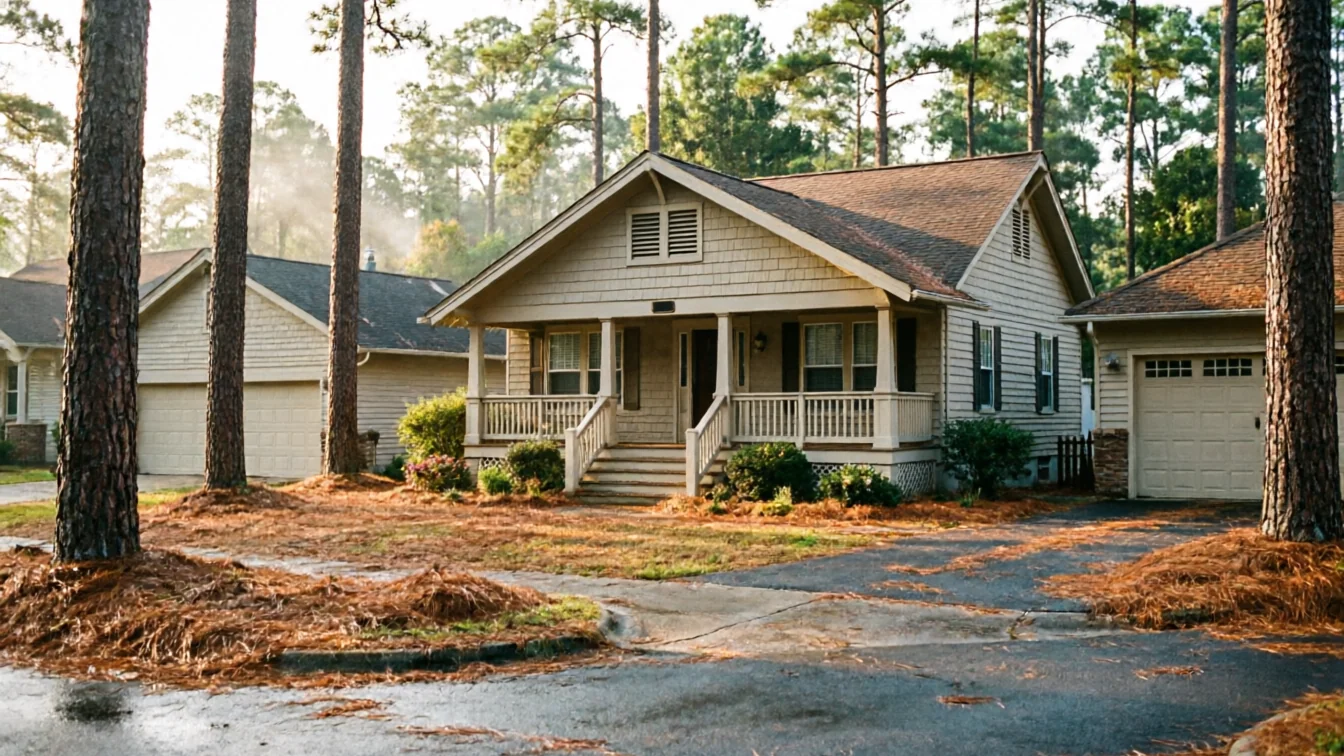
We carry the common replacement boards, capacitors, drive gears, and sensor pairs that cover most chain and belt-drive openers still running in houses this age. Remotes and keypads in the usual frequencies are stocked too, along with the hardware to re-pair them.
Where it gets slower is a board specific to a discontinued model - some units from the early 1990s used proprietary logic boards that the manufacturer stopped making years ago. In that case we'll tell you straight: either we source a compatible aftermarket board, which can take a few days, or replacement is the faster and often cheaper path. We won't pretend a part is on the shelf when it isn't.
Booking
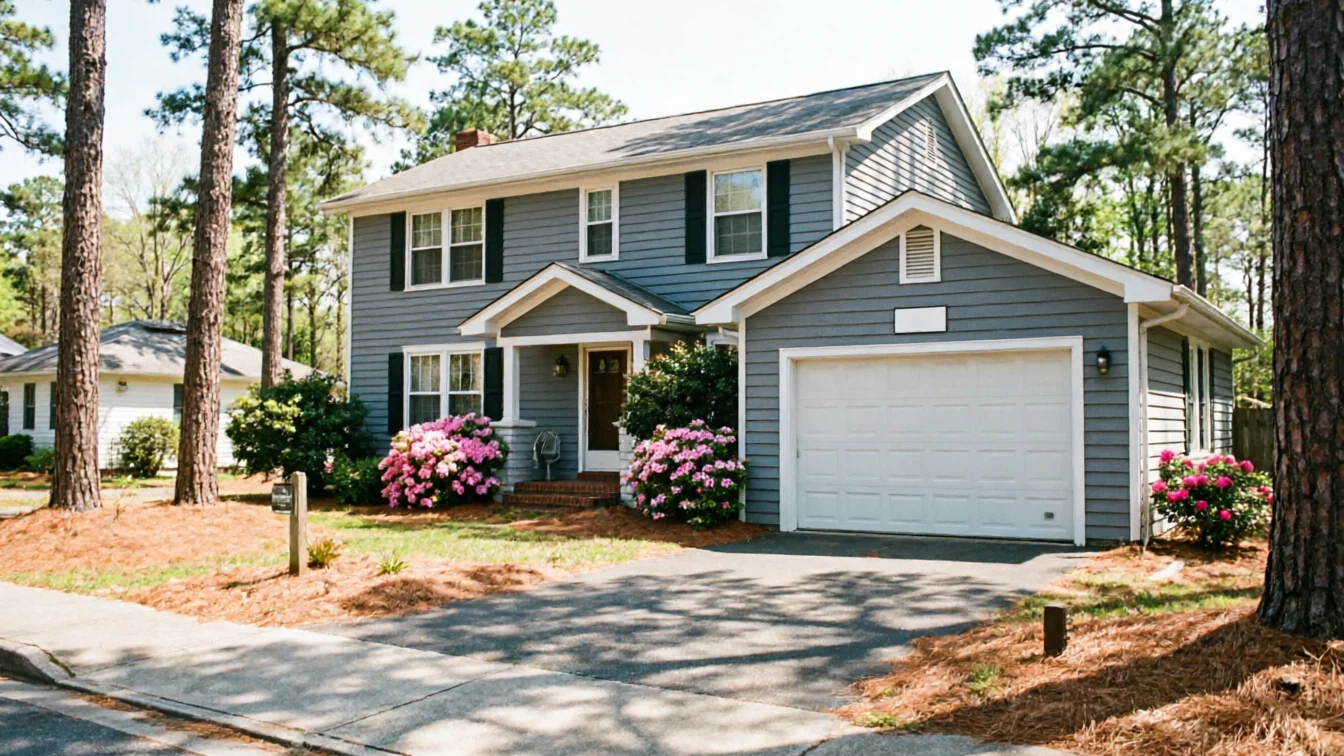
We run this job out of Maryville, about 14 miles south - there's no branch truck parked in Farragut, so the visit is scheduled rather than drop-in. That's a fair tradeoff against promising something we can't back up.
If you want the full rundown of what we handle out of Maryville, that's on our opener repair page for Maryville. For more on how we cover Farragut specifically, see the Farragut area page.
Questions
If your house dates to around the early 1990s like most of Farragut, your original opener is past 30 years old. A board or gear repair can still make sense if the motor itself is sound, but at that age a second failure within a year or two isn't unusual. We'll tell you the real odds once we've looked at it, not before.
This area sits in a cold-moderate climate band, and cold grease on the rail and in the gearbox makes the motor work harder to move the trolley. On a drive gear that's already worn from decades of use, that extra load is often what finally strips a tooth or trips a worn capacitor.
No. We run out of Maryville, about 14 miles away, and schedule Farragut visits from there rather than keeping a truck stationed locally. It means booking ahead rather than same-hour drop-in service.
That usually points to the remote's battery, a frequency mismatch if you bought a universal remote, or in older units a logic board that doesn't support newer rolling-code signals. We can test which it is on site without guessing.
Explore more
Ready when you are
Maryville Garage Door Pros repairs and installs garage doors, springs and openers in Maryville, TN and the surrounding area.